Professional Facial Cleansing by a Cosmetologist
Dead epithelial cells gradually accumulate on the skin, while pores become clogged with sebum, leading to breakouts and a dull complexion. To prevent this, dermatologists recommend periodic professional cleansing, including atraumatic facial cleansing. This service is available at the PIED-DE-POULE beauty salon in Warsaw: our experienced cosmetologists are ready to offer the most popular and effective methods, including the aforementioned atraumatic cleansing.
Our treatments also include manual facial cleansing, which helps remove excess sebum and exfoliate and eliminate dead skin cells. Regular skin cleansing with micellar water helps regulate the sebaceous glands and prevents excessive sebum production, restoring a healthy appearance to the facial skin.
Types of Facial Cleansing for Blackheads and Comedones
Everyone’s skin is different, so we select individual methods and programmes for each client. Facial cleansing at a salon is a comprehensive treatment that, in addition to cleansing itself, may include masks, massages, moisturising treatments and regenerative procedures. As a result, the duration and cost of facial cleansing may vary.
At the PIED-DE-POULE cosmetology studio, we offer a variety of facial cleansing treatments tailored to each client’s individual needs. In addition to manual facial cleansing, chemical peels are also popular. They help exfoliate dead skin cells and regulate excessive sebum production, preventing the formation of comedones. Before the treatment, we always thoroughly remove eye and facial makeup, while micellar water helps eliminate any remaining makeup. Manual facial cleansing and skin toning are key to a healthy, radiant complexion. The treatment has an antibacterial effect and also helps reduce active acne lesions, leaving the facial skin looking fresh and healthy.
Specialists distinguish between:
Manual Facial Cleansing, Cleansing Using Specialised Equipment, and Combined Cleansing
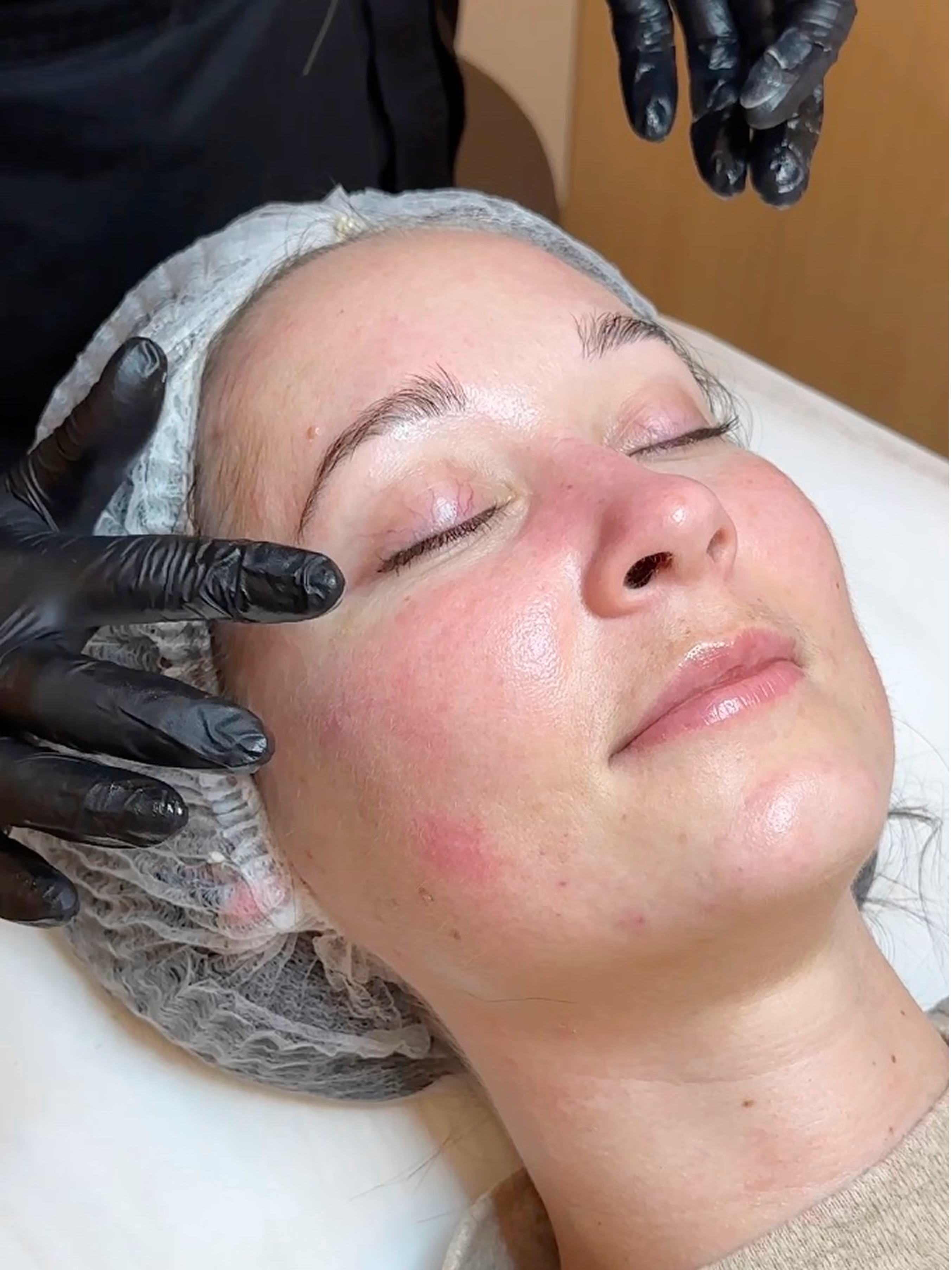
Manual facial cleansing is one of the oldest and most effective methods of cleansing the skin, allowing impurities and excess sebum to be removed thoroughly. During manual facial cleansing, the specialist precisely clears the skin of blackheads and comedones, providing deep skin cleansing that cannot be achieved with home methods. Combining facial cleansing with modern equipment can deliver even better results, leaving the skin fresh and radiant.
Chemical Cleansing
Chemical cleansing, also known as a chemical peel, is a method of deep skin cleansing using special active ingredients. This type of cleansing treatment removes dead skin cells, regulates sebum production and stimulates cell regeneration. In cosmetology studios, chemical peels are tailored to the skin type, allowing for effective facial skincare. Facial cleansing using this method provides deeper effects than traditional treatments, contributing to a healthy and radiant appearance.
Superficial and Deep Cleansing Methods
Superficial and deep cleansing methods differ in their intensity and depth of action. Superficial facial cleansing, often performed using micellar water, helps remove impurities and makeup residue from the epidermis. Deep facial cleansing, in turn, focuses on thoroughly clearing the pores and removing impurities from the deeper layers of the skin, with the treatment tailored to the client’s skin type. An experienced cosmetologist ensures that each facial cleansing method is carefully selected to achieve the best possible results and a healthy-looking complexion.
Manual cleansing, also known as mechanical cleansing, involves removing impurities from the surface of the skin by hand with the help of specialised tools. It is a lengthy treatment, lasting up to two hours, that effectively removes comedones, blackheads and oily skin lesions. A disadvantage of this technique is the increased risk of skin trauma, as full recovery may take up to three days.
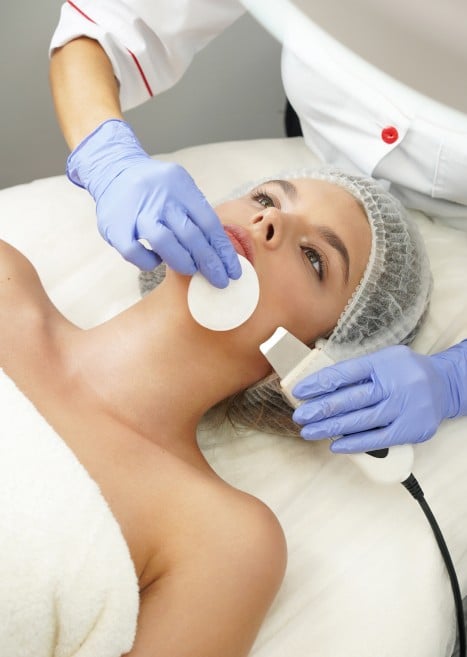
Mechanical methods are performed using specialised devices. These include ultrasonic cleansing, vacuum, galvanic and laser cleansing, as well as brushing and other techniques. There are superficial and deep mechanical methods, characterised by a gentle effect on the skin and a low risk of trauma. Such treatments generally involve 10–15-minute sessions and are carried out as a course consisting of several procedures. Each mechanical method has its own contraindications; for example, vacuum cleansing should not be performed in the presence of inflamed blackheads or dilated blood vessels.
Combined cleansing is recommended when several cleansing methods are required to achieve the desired result. For example, manual techniques may be used on problem areas, while superficial ultrasonic treatment is applied to the remaining areas.
Special acid-based products containing fruit, salicylic or glycolic acids are used for chemical cleansing. The acids dissolve oily deposits on the skin and the upper keratinised layer.
Professional skin cleansing helps improve metabolic processes and stimulates active cell regeneration.
Who Needs Regular Facial Cleansing?
Our skin is constantly exposed to negative external influences, and home care is not always enough. Conventional hygiene products cannot provide complete, deep cleansing, so periodic professional facial cleansing can be considered beneficial for anyone who cares about their appearance. Dermatologists recommend paying attention to this treatment from adolescence, as the sebaceous glands are most active during this period.
In some cases, professional skin cleansing is not merely a recommendation but a necessity. Experts in dermatology and cosmetology list the following among the direct indications for regular treatment:
- increased sebum production and seborrhoeic dermatitis;
- acne eruptions;
- enlarged pores and blackheads (comedones);
- reduced skin tone;
- uneven complexion;
- premature ageing and loss of skin vitality.
The frequency of cleansing and the choice of the optimal method are determined individually based on a professional assessment of the skin’s current condition. For problematic skin, an individual treatment course is selected, which generally involves visiting a cosmetologist once every 4–5 weeks. If the salon treatment is performed for preventive purposes, the skin type is taken into account when determining the optimal frequency:
- For normal, healthy skin, one or two visits per year may be sufficient.
- For combination skin, the interval between cleansing treatments is 2–3 months.
- Oily skin requires more frequent treatments. Monthly sessions are usually recommended.
A carefully selected technique is used in each case. For example, people with dry and sensitive skin may benefit from gentle ultrasonic cleansing, which not only helps remove the dead keratinised layer of the epidermis but also activates metabolic processes in the cells.
Contraindications to Facial Cleansing
Facial cleansing can and should be performed at any age. However, there are certain health-related restrictions.
Temporary contraindications include puberty, menstruation and pregnancy. During these periods, particular caution is required, and some methods may need to be avoided entirely. Skin conditions such as eczema, psoriasis, acute dermatitis, skin abscesses, couperose and herpes are also contraindications. Skin cleansing is not performed on people with acute respiratory conditions or blood disorders; restrictions also apply in cases of bronchial asthma, diabetes, epilepsy and serious hypertension. Before performing the treatment, the specialist must assess the client’s health status and explain all relevant details of the technique.
Sterilisation of Instruments
Because cosmetic procedures involve direct contact with the skin and may sometimes compromise its integrity, we place great importance on instrument processing in our salon. Wherever possible, we use disposable instruments and accessories. All metal instruments undergo:
- disinfection using a specialised solution;
- thorough mechanical cleaning;
- thermal sterilisation.
Cleaned instruments and accessories are stored in special airtight pouches.