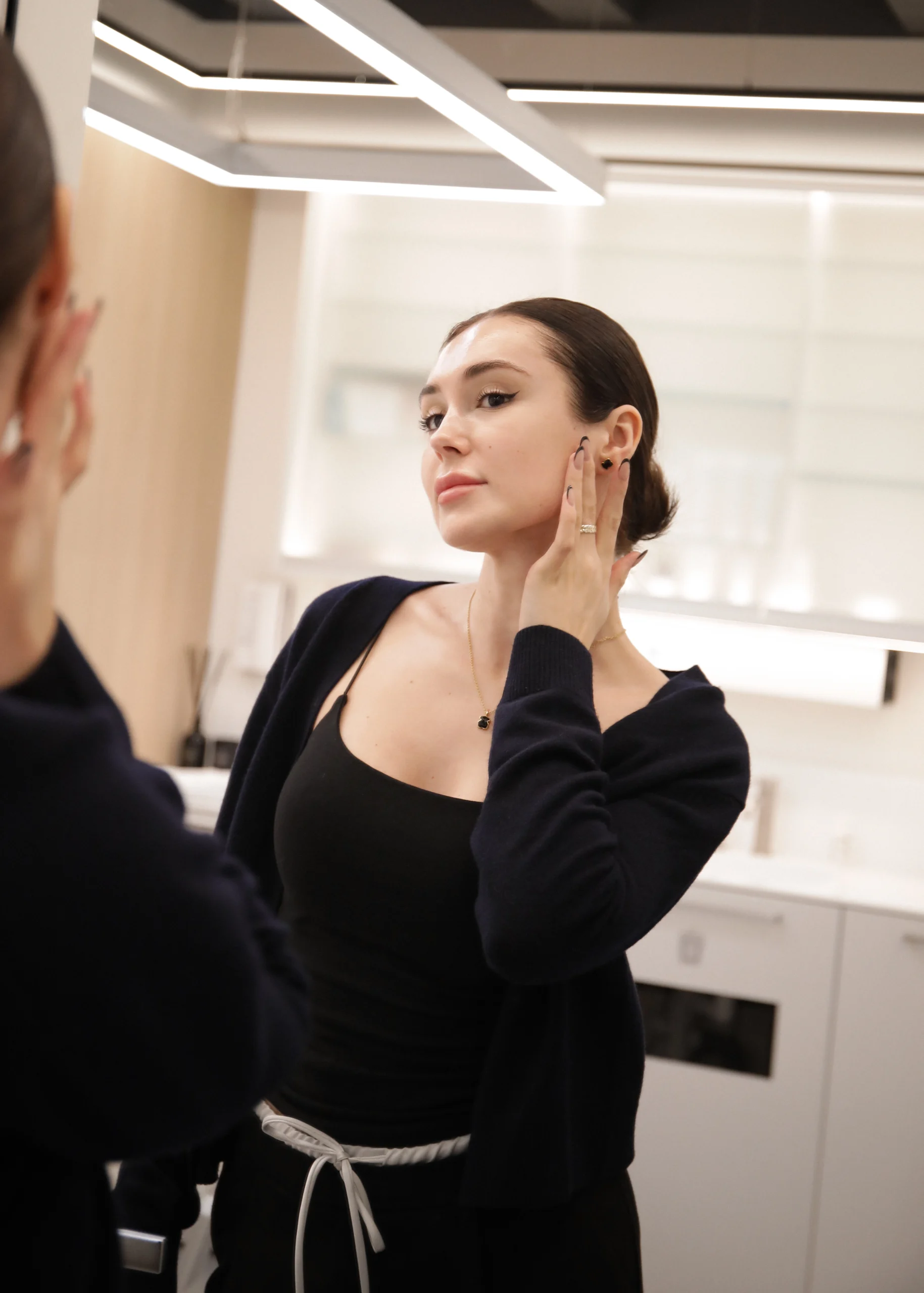
For people with oily and problematic skin, facial skincare can be a serious challenge. Finding the right products and treatments can be difficult. In most cases, it is not possible to deal with these problems on your own at home. To manage breakouts and redness, regular visits to a qualified cosmetologist are necessary. An azelaic peel works with active substances that not only support exfoliation of the epidermis but also effectively reduce pigmentation. The effects of an azelaic peel become visible after just a few treatments, improving the condition of the skin.
Our specialists recommend considering a new treatment — an azelaic peel.
An azelaic peel is invaluable for those who want to reduce acne and pigmentation. This type of peel addresses a wide range of cosmetic concerns. It can be performed as a standalone treatment or as part of comprehensive therapy alongside other facial peels.
An azelaic peel works deep within the skin, helping control sebum production and reduce inflammation, which makes it effective in treating acne vulgaris and rosacea. After an azelaic peel, the skin is visibly refreshed, dead epidermal cells are exfoliated and pigmentation becomes less noticeable. The effects of an azelaic peel include not only clearer skin but also improved texture and a more even skin tone, without the risk of irritating sensitive skin.
Azelaic Peel in Brief
The main active ingredient used for superficial chemical cleansing of the skin is azelaic acid. It acts as the active substance. It occurs in nature and is naturally produced by the human body. In addition to azelaic acid, products used for an azelaic peel contain other active acids: salicylic, lactic and mandelic acid.
Dead areas of the epidermis are removed gently, without harsh exfoliation. In fact, dead cells collect in a thin layer and roll off during the treatment. This means that the recovery period after the cosmetic treatment is minimised. The effect of the peel is immediately visible.
Products used for chemical peels that contain azelaic acid not only cleanse the skin effectively but also help reduce excess oil by removing surplus sebum. Thanks to its gentle action, a chemical peel supports skin regeneration and refreshes the complexion without irritating the skin. Another important aspect is that the treatment not only exfoliates but also moisturises the skin, leaving it smooth and radiant immediately after the procedure.
Indications for an Azelaic Peel
An azelaic peel combines high effectiveness with gentle action. It is therefore recommended for people with sensitive, temperamental and irritation-prone skin. Regular treatment is suitable in the following cases:
- enlarged pores;
- hyperpigmentation and numerous freckles;
- dull skin tone;
- rosacea;
- mild or moderate acne;
- telangiectasia;
- the first signs of skin ageing and fine expression lines;
- flaking and redness of the skin.
Before the first treatment, it is recommended to consult an experienced cosmetologist or dermatologist. An azelaic peel can also prepare the skin for more advanced and deeper cosmetic treatments, such as a salicylic peel.
Effects of an Azelaic Peel
Before discussing the positive effects of an azelaic peel, it is worth understanding the properties of azelaic acid. The acid has a pronounced antibacterial effect and therefore reduces the intensity of inflammatory processes in the skin.
Thanks to its brightening properties, it slows down melanin production. As a result, unwanted skin pigmentation becomes less visible. Azelaic acid is a natural antioxidant. It slows down the ageing process and normalises the regeneration of the epidermis.
An azelaic peel, which is very affordable, has the following undeniable advantages:
- The treatment is well tolerated by the body because naturally derived substances are used.
- Bacteria and microorganisms do not develop resistance to azelaic acid, which means that its effectiveness remains consistently high.
- The peel is equally suitable for both young and mature skin.
- The product does not clog pores or cause allergic reactions.
- Azelaic acid acts gently on the skin.
- The treatment can be performed at any time of year, unlike a glycolic peel.
Studies show that azelaic acid combined with vitamins and plant extracts helps strengthen subcutaneous blood vessels. These vessels are responsible for the appearance of the unpleasant condition known as telangiectasia. The product restores natural oxygen exchange in the cells and helps reduce excessive shine.
How Is an Azelaic Peel Performed?
Azelaic peel treatments are recommended no less frequently than once every 14 days. A full course consists of 7–10 treatments. Preparation for the peel begins one week before the salon appointment. The skin is gradually accustomed to the acid by applying creams containing a low concentration of this active ingredient.
Immediately before the treatment, the specialist removes makeup and impurities from the face using a toner. The peel is then applied to the face and left on for 15–20 minutes. The cosmetologist gently massages the skin to help the dead skin particles separate more effectively.
The active formula is rinsed off with boiled water or a special product. For several days after the treatment, using a tanning bed and visiting a sauna are not recommended. The skin should be protected from UV radiation, and hypoallergenic creams with SPF filters should be used.
Our specialists will be happy to help you preserve the beauty of your skin and prolong its youthful appearance. You can book an azelaic peel online. The cosmetologist will provide a comprehensive consultation and perform the treatment at a time convenient for you. We look forward to seeing you!