Contacts:
Ultrasonic Facial Cleansing

Ultrasonic Facial Cleansing

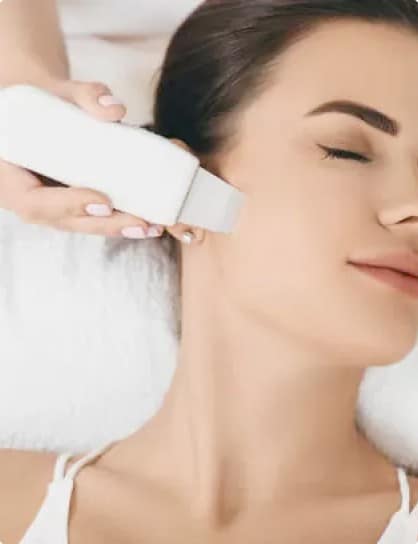
Ultrasonic facial cleansing, also known as cavitation peeling, works like this: the cosmetologist glides a metal spatula across the skin while the wave dislodges sebum and dead skin cells from the pore openings — with no squeezing involved. It works well when your T-zone starts shining just a few hours in, pores are visible and the complexion looks grey and feels rough — including for people who tolerate pressure poorly during classic manual cleansing. We perform ultrasonic facial cleansing at the PIED-DE-POULE salon — as a single visit or a full course.

No downtime

You head straight back to work

Skin like it rebooted

Smooth and ready for makeup

Clear T-zone

No shine on the nose and chin

Comfort for sensitive skin

No pressure, no painful marks

What is ultrasonic facial cleansing and how does it work?

Ultrasonic facial cleansing, also known as cavitation peeling, works with a high-frequency wave. Microbubbles form in the layer of gel on the skin, then burst and dislodge sebum and impurities from the pore openings, while exfoliating dead skin cells from the surface. The cosmetologist glides an ultrasonic scrubber across the face — a metal spatula that sweeps it all off the skin. Nothing is squeezed and the skin is not steamed.

That is exactly what sets ultrasound apart from other methods: mechanical cleansing reaches deeper and handles closed comedones, but it works through pressure. Ultrasonic cleansing stays on the surface — which is why no one will guess you have just been to a cosmetologist.

Ultrasonic facial cleansing: which option to choose

At PIED-DE-POULE we offer ultrasonic facial cleansing in two versions:

Full treatment. Ultrasound across the whole face, finishing with a preparation and a care mask matched to your skin condition. You choose this one when you need a refresh before going out, or when you keep a regular skincare rhythm.

As the first stage of a longer visit. The wave loosens the contents of the pores, and the cosmetologist works precisely on what the ultrasound cannot shift — this is the basis of combined cleansing, which we turn to when there are many closed comedones.

You decide on the option on the spot — the cosmetologist examines your skin before the treatment and tells you which one makes sense that day.

Ultrasonic facial cleansing — who it suits

  • Your T-zone shines just a few hours after washing
  • Pores on the nose and cheeks are visible, with dark dots inside
  • The complexion looks grey and feels rough, and makeup gathers on it
  • You tolerate pressure poorly and stay red for half a day after classic manual cleansing
  • You have closed comedones and minor imperfections — ultrasonic cleansing for mild acne clears the skin between more serious treatments
  • Oily, shiny skin with no inflammation — ultrasonic cleansing for teenagers starting a regular routine
  • Clogged pores and roughness along the jawline — ultrasonic cleansing for men after daily shaving

The treatment covers the face. We do not perform ultrasonic cleansing on hands, back or the whole body. Cleansing alone does not hydrate or smooth the skin; if that matters to you as well, the cosmetologist will suggest mesotherapy.

How often ultrasonic facial cleansing should be repeated

The rhythm is set by how quickly the pores fill up again. Oily and combination skin needs cleansing more often than normal or dry skin, and with heavily clogged pores the cosmetologist starts with a series of treatments at shorter intervals before switching to a maintenance schedule. You will hear the specific interval after your skin is assessed at the first visit. If, alongside cleansing, you want to work on firmness and facial contour, facial massage fits into the same intervals.

Ultrasonic facial cleansing: contraindications

We do not perform the treatment in cases of:

  • active inflammation, pustular lesions and fresh wounds on the face
  • rosacea and couperose skin in an acute phase
  • pregnancy
  • a pacemaker and metal implants in the facial area
  • epilepsy and cancer under active treatment
  • recent acid treatments, laser therapy or injections

The cosmetologist conducts an interview before the treatment. If the skin changes have a medical background, you see a dermatologist first — and only then do we book the treatment.
Read More

Ultrasonic facial cleansing step by step

01
Consultation and skin assessment

The cosmetologist examines your complexion and asks about your home routine, past treatments and health conditions. On this basis they choose the version of the treatment and explain what to expect.

02
Makeup removal and skin preparation

The cosmetologist removes makeup, cream and sunscreen — the ultrasound must reach clean skin, otherwise the wave works on cosmetics rather than on the pores.

03
Applying the conductive gel

The cosmetologist spreads a thin layer of gel across the face. This is where the microbubbles form; without it the wave has nothing to work in.

04
Working with the ultrasonic scrubber

The metal spatula glides across the skin section by section, sweeping away sebum and dead skin cells. You feel light vibrations and the coolness of the metal, nothing more.

05
Care mask

The cosmetologist applies a preparation matched to your skin condition and finishes with a mask. Freshly cleansed skin absorbs the ingredients more effectively than usual.

06
Aftercare advice

The cosmetologist explains what to avoid over the next few days and how to wash your face at home. If your skin needs a course, you arrange the next appointment right away.

Time to preen my feathers

Book an appointment

Ultrasonic facial cleansing: results

Peeling kawitacyjny – pielęgnacja skóry po zabiegu
  • SMOOTHER SKIN SURFACE

    The wave exfoliates the dead layer, so the skin feels smoother immediately after the treatment.

  • CLEAR PORES

    Microbubbles dislodge sebum from the pore openings, so pores appear visually narrower and the T-zone stops shining.

  • HEALTHY COLOUR

    The micromassage from the head boosts circulation in the skin, and a grey, tired complexion regains a healthy glow.

  • MORE EFFECTIVE SKINCARE

    Skin free of dead cells absorbs the ingredients from the mask and creams, so your home routine works harder after the visit.

FAQ

  • Ultrasonic facial cleansing: does it hurt?

    No. You feel the vibrations of the spatula and the coolness of the metal, sometimes a light tingling around the nose. The cosmetologist does not squeeze anything, so there is no moment to dread.

  • Ultrasonic facial cleansing: how long does it take?

    The visit includes a consultation, makeup removal, work with the scrubber and a mask. The cosmetologist gives you the exact time when you book, as it depends on how much work your skin needs.

  • Does ultrasonic cleansing remove comedones?

    The wave dislodges open comedones and sebum from the pore openings well. Closed comedones sit deeper and ultrasound alone will not shift them — in that case the cosmetologist adds targeted cleansing.

  • Ultrasonic facial cleansing: results after 1 treatment — what can you see straight away?

    The skin feels smoother, pores are cleaner and the complexion is brighter. You can apply makeup the same day, and there are no visible marks.

  • Ultrasonic facial cleansing: contraindications — when is it not possible?

    With active inflammation, fresh wounds, rosacea in an acute phase, during pregnancy, and with a pacemaker or metal implants in the face. The cosmetologist goes through the full list with you at the consultation.

  • Ultrasonic facial cleansing: prices — how much does it cost?

    The price depends on whether the treatment is standalone or part of a longer visit. You can check the current rate in the price list or with the administrator when booking.

  • After ultrasonic cleansing — how to care for your skin?

    For the first 24 hours you skip the sauna, the pool and strong acids. Wash your face with a gentle cleanser and apply sunscreen when going outside — freshly exfoliated skin is more sensitive to it.

  • Ultrasonic facial cleansing: can it be done in summer?

    Yes. The treatment does not make the skin photosensitive the way acids do, so summer is not an obstacle — provided you use sunscreen every day.

More:
Book Now