Choosing a hairstyle for your face shape affects whether your features appear more balanced, softer, or more defined. It is not only current trends that matter, but also hair length, volume around the face, fringe, layering, and your everyday styling routine.
How to identify your face shape?
Before choosing a specific haircut, it is worth understanding which face type is closest to your features. This is not about perfect geometry, but about a general direction that helps you choose the right length, volume, and hairstyle line.
The easiest way is to brush all your hair back and stand in front of a mirror in a well-lit room. You can outline the contour of your face on the mirror with a washable marker or soap and compare the shape with the features listed below.
The most common face shapes include:
- round — the width and length of the face are similar, the jawline is soft, and the cheeks are fuller;
- square — the forehead, cheekbones, and jaw are similar in width, and the lower jawline is clearly defined;
- oval — the face is slightly longer than it is wide, and the features are balanced and soft;
- long — the face is noticeably elongated, often with a high forehead and narrow cheeks;
- triangular / heart-shaped — the forehead is wider, while the lower part of the face narrows toward the chin.
In practice, many people combine features of two face shapes. That is why choosing a hairstyle for your facial features should not be based only on a general scheme. It should also take into account hair structure, density, and natural growth direction.
Hairstyles for different face shapes
Dividing face shapes into types helps you understand what effect you should aim for with a hairstyle. For one shape, the goal may be visual elongation; for another, softening the features or adding volume in the right area.
| Face shape | Styling goal | Recommendations |
| Round | Elongation and visual slimming | Asymmetrical cuts, length below the chin, light layering. |
| Square | Softening the features | Soft waves, layers around the face, side-swept fringe. |
| Oval | Emphasising proportions | Most hairstyles: from short cuts to long waves. |
| Long | Visually shortening the face | Fringe, volume at the sides, shoulder-length cuts. |
| Triangular / heart-shaped | Balancing the lower part of the face | Curls, waves, and volume at jawline level. |
If you are wondering which hairstyle suits a square face best, the key goal is to soften the clearly defined jawline. Soft waves, layers, and fringes falling to the sides work well.
A hairstyle for a round face should visually elongate the proportions. Cuts below the chin, asymmetry, and volume at the roots are better choices than heavy lines that end at cheek level.
For a long face, hairstyles with volume at the sides usually work better than very long, straight strands. A hairstyle for a triangular face, on the other hand, should balance a wider forehead with a more delicate lower part of the face.
With an oval face shape, there are the most options, but it is still worth considering hair density and everyday habits. Different women’s hairstyle ideas can be a good source of inspiration, especially if you are planning a significant change in length or shape.
Hair length, fringe, and layering
How to choose the right hairstyle for your face shape depends not only on the haircut itself. Very often, the biggest difference comes from details: the length around the chin, the way the fringe is styled, or the layers around the cheeks.
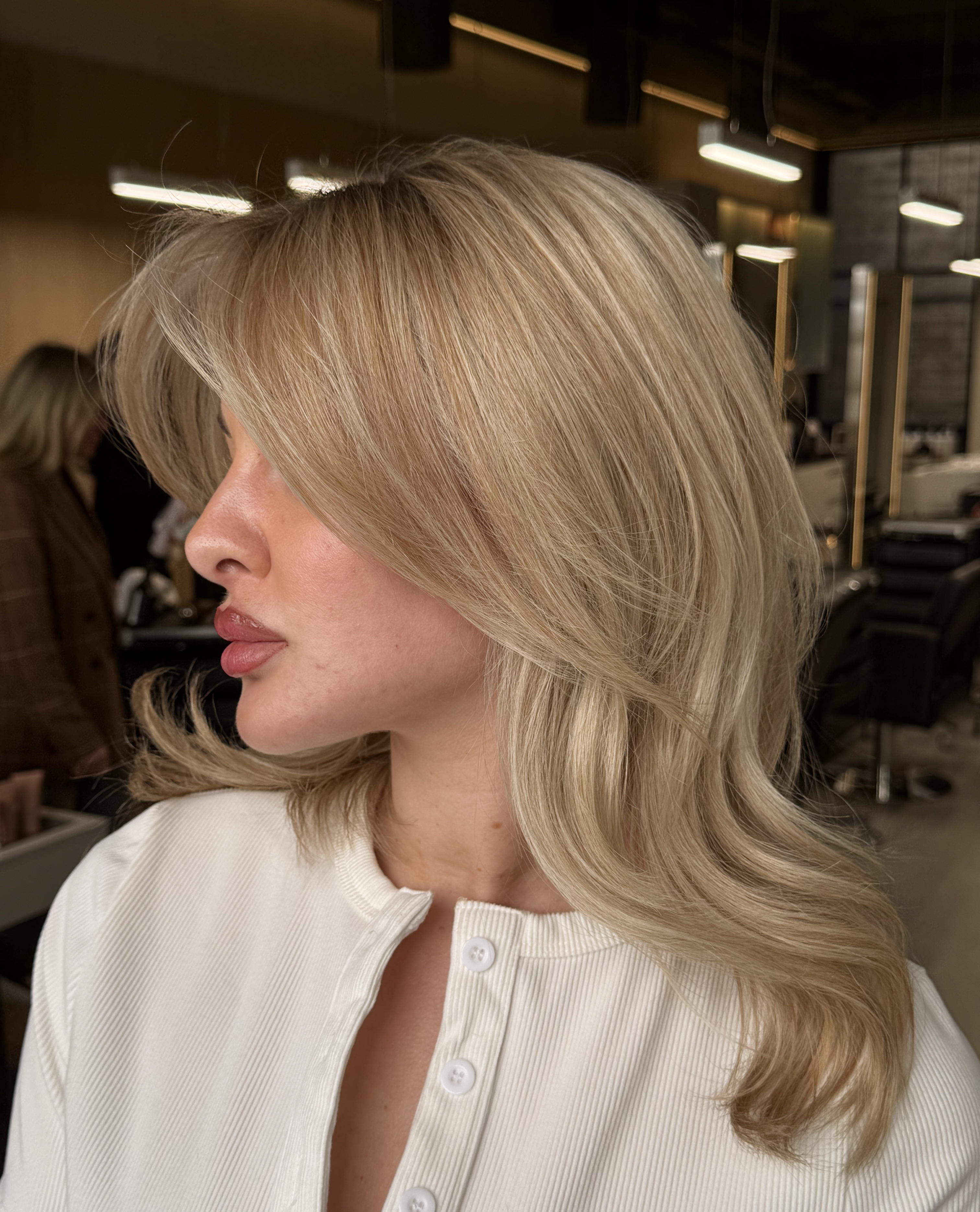
Layering around the face helps shape proportions. Soft layers can soften the features of a square face, add lightness to thick hair, or visually slim the cheeks.
A fringe should be chosen individually according to the face shape. A straight, thick fringe can visually shorten a high forehead, but with a low forehead it may look too heavy. Lighter curtain bangs open up the face and suit many appearance types. If the change mainly concerns the front part of the hairstyle, it is worth analysing the shape and length of the fringe separately.
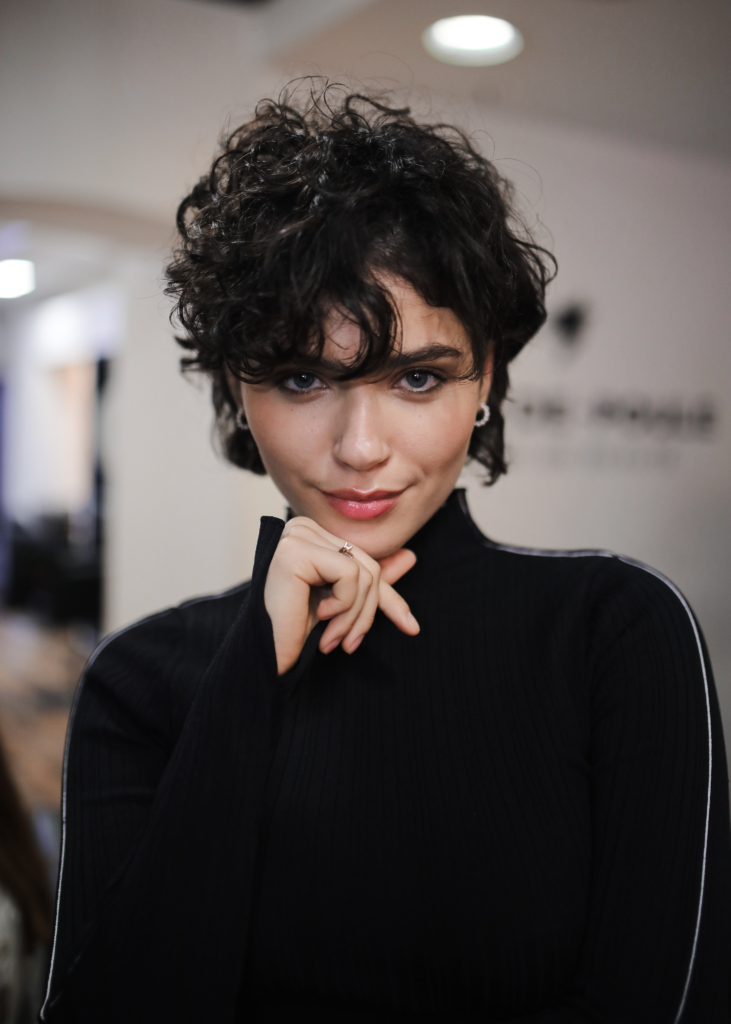
Hair length and face shape are another important element. Short hairstyles emphasise the neck and jawline more strongly, so they often look good with balanced or delicate features. Longer, layered strands around the face can create a visual slimming effect.
The perception of proportions is also influenced by colour and highlights around the face — lighter strands can visually brighten the features, while darker contours can make them more defined.
Why do hair type and lifestyle also matter?
Face geometry is only one part of the choice. A hairstyle should also suit the texture of your hair, its condition, and how much time you can spend on daily styling.
Fine hair usually needs lightness and volume, while very thick hair requires a well-planned cut that will not create too much heaviness around the face. Curly, straight, and wavy hair react differently to the same length, so one inspiration photo is not always enough.
A common mistake is choosing a hairstyle only from a photo, without considering your own hair density, growth direction, and the time needed for styling. If you only have a few minutes in the morning, complicated blow-drying with a brush can quickly become a problem.
An everyday haircut should be approached differently from a situation where hair styling for a special occasion is important. In that case, durability, volume, and how well the hairstyle matches the outfit become more important.
When making a significant change in length, it is helpful to match the haircut to facial features, the natural direction of the hair, and lifestyle. This way, the hairstyle looks good not only after leaving the salon, but also in everyday life.