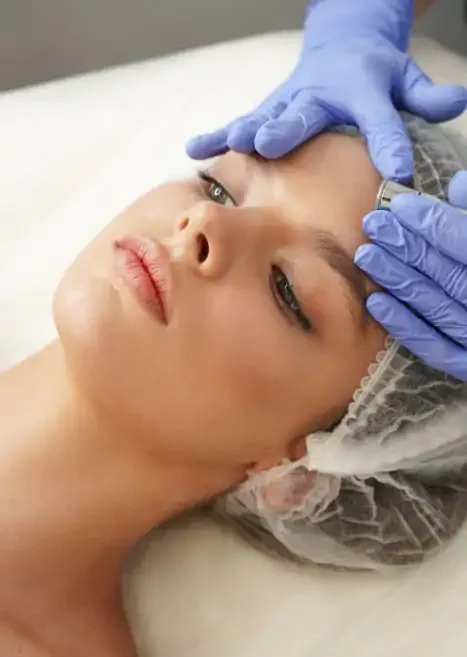
Polynucleotides are fragments of DNA and RNA sourced from salmon, introduced into the skin through fine injections. Unlike classic mesotherapy with vitamins or hyaluronic acid, which mainly hydrates on the surface, polynucleotides stimulate fibroblasts to produce the skin’s own type I and III collagen and elastin. The treatment plan is built around a single consultation, where the cosmetologist assesses the skin’s condition, checks for contraindications, and chooses a preparation suited to the specific area.
Polynucleotides Under the Eyes and on Other Facial Areas
The delicate under-eye area is treated with lower-density gels that smooth out crow’s feet, reduce dark circles, and restore elasticity to the thin, thinning skin of the eyelids. The face, neck, and décolletage receive denser formulas, designed for deeper wrinkles and loss of firmness. Post-acne scars, atrophic scars, and stretch marks call for a different approach altogether — a dense gel injected in a targeted way, directly beneath the damaged tissue.
Popular Polynucleotide Preparations
At PIED-DE-POULE, we match the preparation to the treatment area: different gels are used under the eyes than for scars or larger facial areas.
- Rejuran Healer is the flagship Korean preparation with medium viscosity, used on the face, neck, and décolletage. It improves skin texture, tightens visible pores, regulates sebum production, and restores natural radiance — a good choice to start with for a first skin revitalisation.
- Plenhyage XL STRONG is an Italian preparation with a high concentration — 25 mg/ml of polynucleotides — and high molecular weight. It works well for advanced signs of ageing, deep wrinkles, atrophic scars, and pronounced sagging of the skin on the face, neck, décolletage, hands, and body, acting like a strong lift and stimulating intensive remodelling of the dermis.
- Plenhyage XL THIN is a soft gel with lower density and concentration, designed specifically for delicate eyelid skin. It smooths fine expression lines, reduces dark circles, and removes signs of tiredness without risk of swelling.
- REJURAN S is a highly concentrated gel with increased viscosity, injected in a targeted way under post-acne scars, post-surgical scars, and stretch marks — the preparation fills the damaged area from within and stimulates the rebuilding of healthy tissue.
- REJURAN I is a liquid preparation with low viscosity, used around the eyes. It firms up the thin, parchment-like eyelid skin, smooths the network of fine wrinkles, improves microcirculation, and reduces dark circles.
- REJURAN HB (Hydro Booster) combines polynucleotides with hyaluronic acid and lidocaine. It works well for dry, tired, or sun-damaged skin, especially after forty, and the addition of an anaesthetic makes the treatment comfortable even for those with a lower pain threshold.
How Long the Treatment Takes and How Many Sessions Are Needed
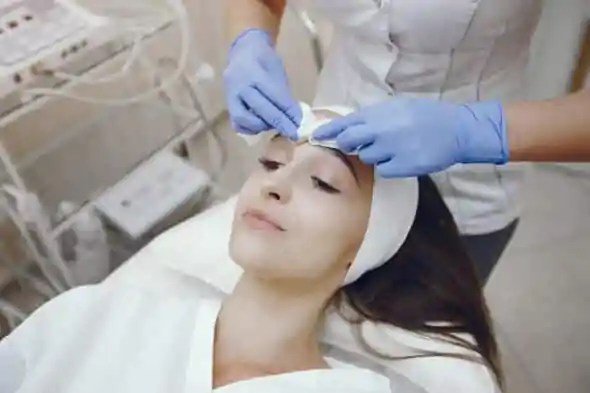
A single session takes 45 to 60 minutes and includes cleansing the skin, applying a numbing cream for 20–30 minutes, and the injection of the preparation itself — in a papular pattern, linear pattern, or using a cannula. The full biostimulation effect requires a course — usually 3 to 4 treatments at intervals of 2–4 weeks. Only this kind of polynucleotide mesotherapy, done as a course, delivers a lasting increase in skin density rather than just temporary hydration.
Who Polynucleotides Work Best For
Polynucleotides work well for people aged 20–30 who wake up with dark circles despite a good night’s sleep, or who notice their first expression lines despite their young age — in these cases the treatment works preventively and smooths out acne marks. After the age of thirty-five, the priority shifts to rebuilding skin density, reducing deeper wrinkles, improving sagging, and restoring a defined facial oval. The treatment also helps with dry, dull skin and speeds up recovery after laser resurfacing, chemical peels, or surgical procedures, including after an intensive facial cleansing.
When It’s Worth Consulting a Doctor Before the Treatment
Polynucleotides have high biocompatibility and rarely cause allergic reactions. However, a few situations call for a conversation with a doctor before booking an appointment: pregnancy and breastfeeding, oncological conditions, active infections at the injection site (for example, cold sores), flare-ups of autoimmune conditions, and blood clotting disorders or the use of anticoagulant medication. The cosmetologist asks about this already during the first consultation, before planning a course of treatments.
Polynucleotide Results and When You’ll See Them
The first changes are visible after 1–3 days, once the small bumps from the injections subside and the skin gains a gentle glow. The real effect of the tissue stimulators — that is, the build-up of new collagen — unfolds over the following weeks and intensifies with each treatment in the course, giving a cumulative rather than a one-off effect. Clients who also want a fast hydration boost for a single event often combine the course with classic mesotherapy, which works in a targeted, immediate way.