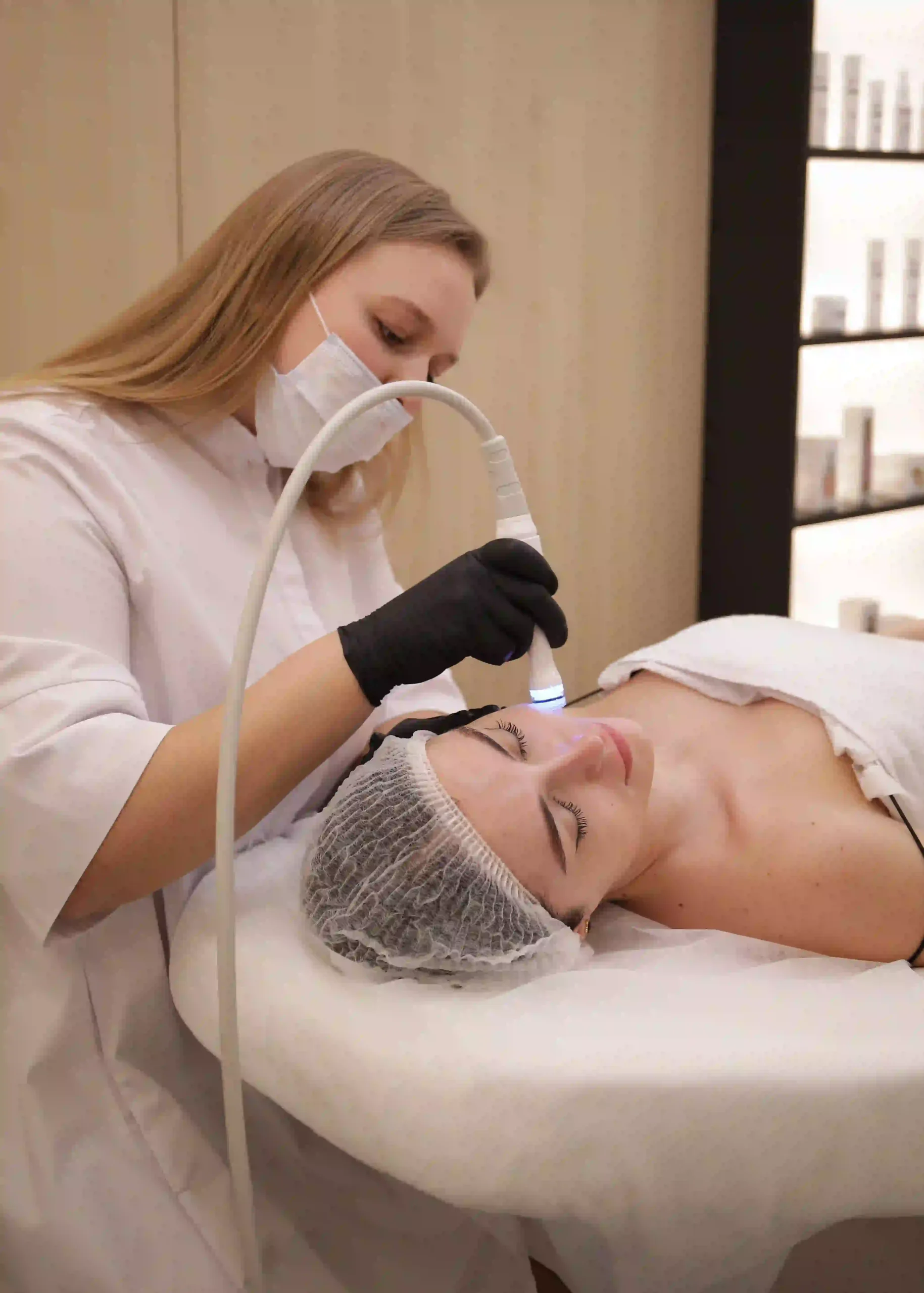
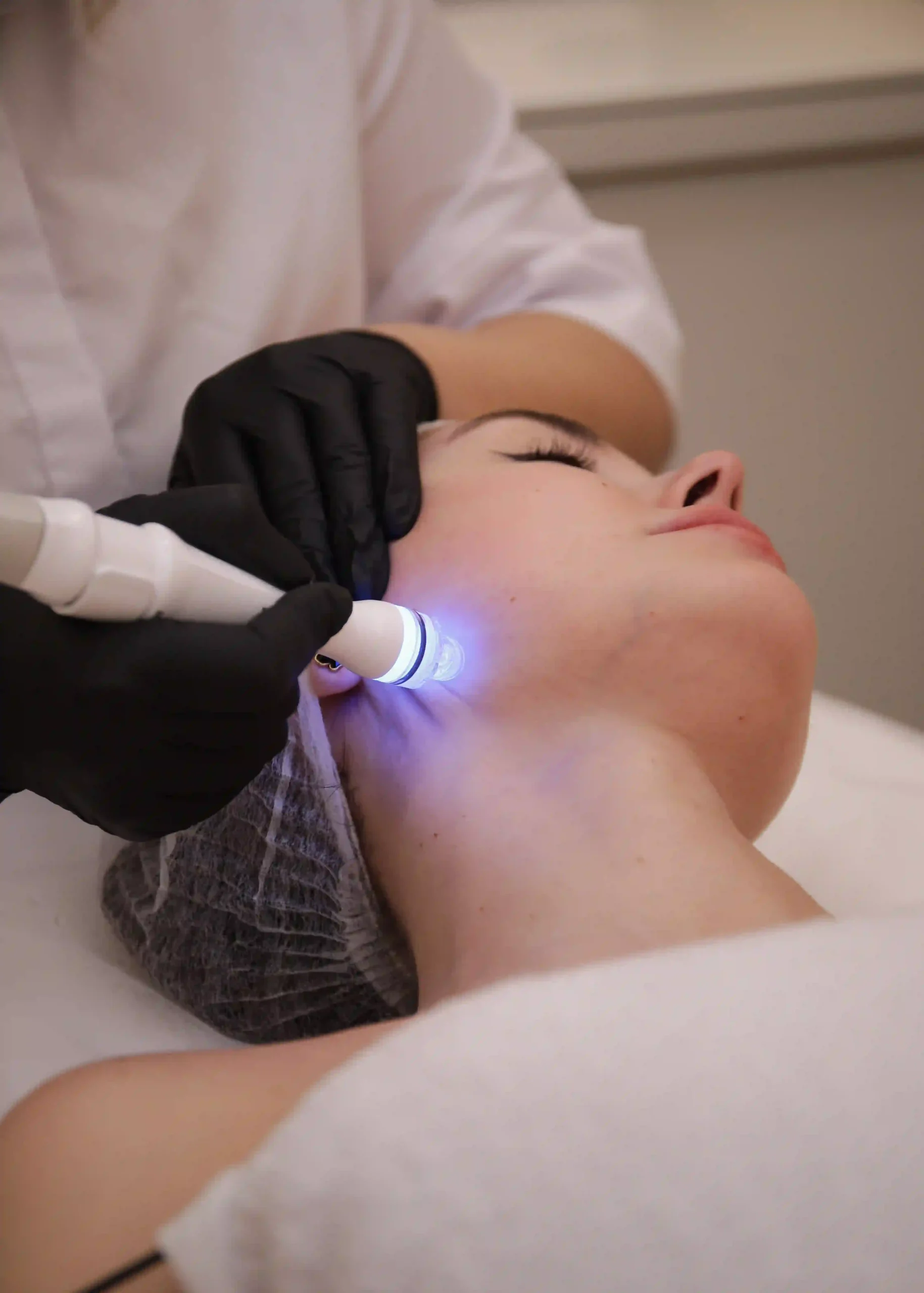
Sonophoresis is a cosmetology treatment in which ultrasound helps active ingredients from a serum pass through the epidermal barrier into deeper layers of the skin. They work where a cream cannot reach. Even a very good cosmetic product largely remains on the surface because molecules such as hyaluronic acid or vitamin C are too large to penetrate the stratum corneum on their own. The device handpiece changes this for several minutes.
Sonophoresis — How It Works
The handpiece emits an ultrasound wave at a frequency of around 1–3 MHz. The cells begin to vibrate, creating a micromassage effect, while the tissues are gently warmed. Cell membranes become more permeable and, for a certain period, are better able to absorb what the cosmetologist has applied to the skin.
Ultrasound itself does not hydrate or nourish the skin. It acts as a carrier, while the chosen product provides the effect. The most commonly selected ingredients include:
- hyaluronic acid, which binds water and relieves the feeling of tightness,
- vitamin C, which helps brighten pigmentation and even out skin tone,
- peptides, which stimulate fibroblasts to produce collagen,
- niacinamide and soothing extracts for redness and excess sebum.
Sonophoresis vs Cavitation Peeling — What Is the Difference?
The same type of device is used for the treatment that we offer as cavitation peeling, but in that treatment the spatula works on moistened skin and removes dead skin cells together with sebum. Sonophoresis works in the opposite direction. It does not remove anything from the surface but helps deliver active ingredients into the skin.
Unlike needle mesotherapy, it does not involve punctures. No microchannels are created in the skin, so there is no redness or scabbing, and the face looks normal immediately afterwards.
Who Is Sonophoresis For?
This treatment is particularly suitable when:
- your face feels tight in the morning after washing and the cream seems to disappear within an hour,
- foundation settles on dry patches and emphasises lines on the cheeks,
- after winter, flights or an intensive period at work, the complexion looks dull,
- pigmentation remains after a holiday and does not respond to brightening cosmetics,
- the first fine lines have appeared but injections are not an option,
- you have an important event in a few days and cannot afford visible redness.
For morning puffiness, the cosmetologist moves the handpiece along the lymphatic drainage pathways, following the same principles used in our facial massage.
Sonophoresis — Indications
A cosmetologist may recommend the treatment for specific skin concerns:
- dehydration and dryness of the epidermis, including in oily skin,
- dull, uneven complexion,
- sun-induced pigmentation and dark marks after breakouts,
- early fine lines and reduced firmness,
- excess sebum and a tendency to breakouts outside the active inflammatory stage,
- a tendency to redness,
- dark circles and puffiness under the eyes,
- dry and lax skin on the neck, décolletage and backs of the hands.
Each indication requires a suitable product. For dehydration, the cosmetologist chooses hyaluronic acid; for pigmentation, vitamin C; and for loss of firmness, peptides.
Facial Sonophoresis — Results and When They Become Visible
After the first visit, the skin feels soft, more supple and no longer tight. The hydration effect lasts for several days. After three or four treatments, the complexion becomes more even and pores appear smaller. Pigmentation and firmness require a full course, with the first changes appearing after 4–6 weeks.
For blackheads and clogged pores, it is worth starting the course with facial cleansing, as active ingredients penetrate more effectively into skin that is free from accumulated sebum.
A standard session covers the face and lasts 30 minutes. In the 45-minute version, the handpiece is also used on the neck and décolletage. The 60-minute session begins with exfoliation using an ultrasonic spatula, and this is the option we choose for the first visit.
Sonophoresis — How Often Should It Be Repeated?
A course of 6–10 treatments is scheduled every 7–10 days. Afterwards, one visit per month is usually enough to maintain hydration and an even complexion. When a vitamin C serum is used, daily SPF 50 is essential because it helps protect brightened areas from darkening again.
Sonophoresis — Contraindications
The treatment is not performed in cases of:
- pregnancy and breastfeeding,
- a pacemaker or metal implants in the facial area,
- cancer,
- active herpes, inflammation, wounds or fresh irritation,
- fever or infection,
- epilepsy,
- dermal fillers or botulinum toxin administered within the previous two weeks.