Brittle and fragile nails are a problem that many people struggle with, regardless of age or lifestyle. While it often seems like it’s simply a matter of care, in reality, the causes can be much more complex.
Brittle nails most often result from a combination of factors—from micro-damage, to dry nail plate, to nutritional deficiencies. This is why many people wonder why nails break and what causes the problem to recur despite care.
What actually leads to brittle nails?
To understand what causes brittle nails, it’s worth looking beyond cosmetics. In practice, brittle nails have various causes, and their source isn’t always obvious.
Micro-damages that are not immediately visible
Everyday activities can lead to minor damage that accumulates over time. Opening packages, impacts, or lack of hand protection cause the nail plate to gradually lose its strength. Therefore, the causes of brittle nails are often more mechanical than cosmetic.
Loss of elasticity due to dryness
A nail doesn’t have to be very thin to break—it just needs to become too stiff. Drying out the nail plate leads to a loss of elasticity, which increases its susceptibility to cracking. Frequent contact with water and detergents can be one of the most common causes of this condition.
Internal factors and deficiencies
Weak nails can also result from nutrient deficiencies. The body’s primary function is to support key functions, so a weakened nail plate is often one of the first signs.
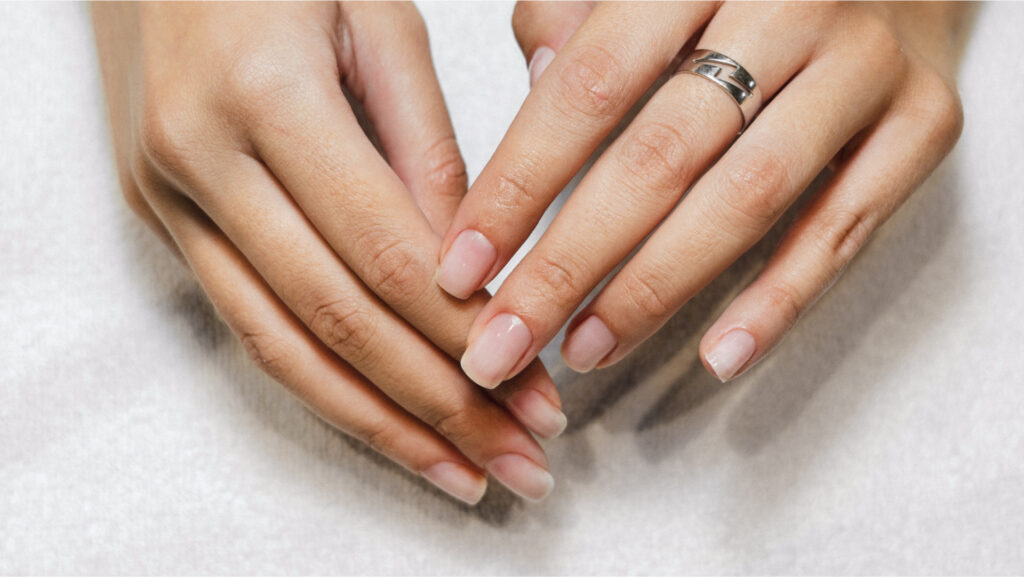
Brittleness, fragility, and splitting – different symptoms of the same problem
Although these terms are sometimes used interchangeably, in practice they refer to different mechanisms.
- When a nail breaks.Most often, it breaks at the point of stress – this means that its structure has been weakened or has lost its elasticity.
- When a nail splits.Nail splitting is a gradual process. The nail plate loses its layered integrity, most often due to dryness or long-term damage.
Habits that unconsciously damage your nails
In many cases, nail problems are not caused by a lack of care, but by improper care.
- Too intense interference with the plate
Aggressive filing or mechanical removal of nail polish leads to micro-damage that weakens the nail structure.
- Imbalance between styling and regeneration
Constant stress on the nail plate without time to regenerate makes it increasingly susceptible to damage.
- Underestimating cuticle care
The condition of your cuticles affects how your nails grow. Dryness can worsen nail problems and affect the quality of your nail plate.
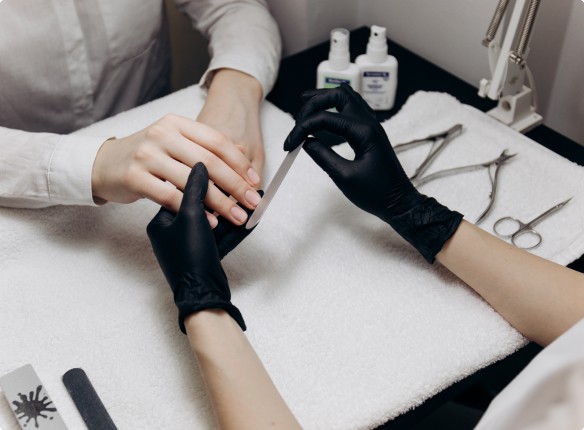
How to support the regeneration of weakened nails?
Nail regeneration is a process that takes time and consistency – there is no single quick solution.
Restoring elasticity
The key is moisturizing and rebuilding the nail plate’s natural barrier. This is especially important for thin and brittle nails.
An approach that combines care and aesthetics
In practice, the following approaches are used combining elements of care and aesthetics, which allow you to take care of the appearance and condition of your nails at the same time – especially when the problem is not advanced.
When is it worth consulting a problem?
If your nails are very thin, painful or changing structure, you may want to consider more specialized approach, especially when the problem also affects the skin around the nail.

The most common mistakes that make the problem worse
- no hand protection when using detergents
- too frequent styling changes
- irregular care
- ignoring the first symptoms
Why don’t quick fixes work?
Many people look for immediate results, but brittle nails are the result of a process that develops over time.
Therefore, nail regeneration requires a long-term approach – not one-time actions.
Brittle nails are rarely a coincidence—most often, they’re the result of daily habits and the gradual weakening of the nail plate. Understanding the cause of the problem allows you to choose the right actions and rebuild your nails permanently, rather than just masking the symptoms.
How to care for your nails to prevent them from breaking?
In practice, the most important thing is not only reacting to the problem, but also everyday habits that affect the condition of the nail plate.
- regular moisturizing of nails and cuticles
- hand protection when in contact with detergents
- avoiding mechanical damage to the plate
- maintaining a balance between styling and regeneration
It is worth remembering that improving the condition of nails takes time – the first effects may only be visible after a few weeks, as the new nail plate grows.
However, if the problem persists despite changes in care or is accompanied by other symptoms, a consultation with a specialist who will assess the condition of the nails and help choose the right approach may be a good solution.