Lifting black hair ranks among the toughest jobs in coloring. Reaching a pale shade, or simply refreshing the look, without wrecking the structure of the strand calls for groundwork and an experienced eye: a defined strategy, quality products, and work broken into stages. Below is how salon hair lightening works when the starting point is black, and what to weigh up before you start.
Why black is the hardest colour to lift
Black reads as rich and expensive, yet dyes carrying the darkest pigment sink deep into the hair shaft. Naturally dark strands already resist lifting; previously coloured ones resist far more. Skip the plan and the likely outcome is patchy tone alongside serious damage, which is exactly why this makes a poor home experiment.
How black pigment behaves
Pigments in black dye are dense, saturated and stubborn. As they break down under lightening, warm undertones surface first, reddish through to orange. Dedicated products such as a decolorizer handle that stage before any toning or dyeing into a paler shade can follow.
Risks of doing it without a professional
Attempting to lift dyed black at home tends to end in snapped strands, parched ends and uneven patches. With no control over the process and no recovery work afterwards, even hair in excellent condition takes the hit.
What shade is achievable after lightening
A cool blonde in one appointment is not on the table. The route from black to blonde runs gradually, and where it ends depends on a whole set of variables.
Soft transitions versus a full lift
Keeping hair quality intact usually argues for gradual work: ombré, shatush, balayage. Coloring like this after black settles in naturally and spares you bleaching the entire length in one go.
What a single session can deliver
One visit can move black up by several levels, and the scale runs to 12 in total, but blonde out of black is a longer story. Bleaching almost always leaves yellow or red behind, so toning follows to correct whatever pigment remains.
How many stages the journey from black takes
That number comes down to the characteristics of the hair itself.
Length and porosity stretch the timeline, since pigment sits unevenly along the strand. Coloring history weighs just as heavily: black applied repeatedly, or with permanent formulas, means more lifting steps. Condition and the kind of dye involved, professional or drugstore, decide how fast and how safely the target shade arrives.
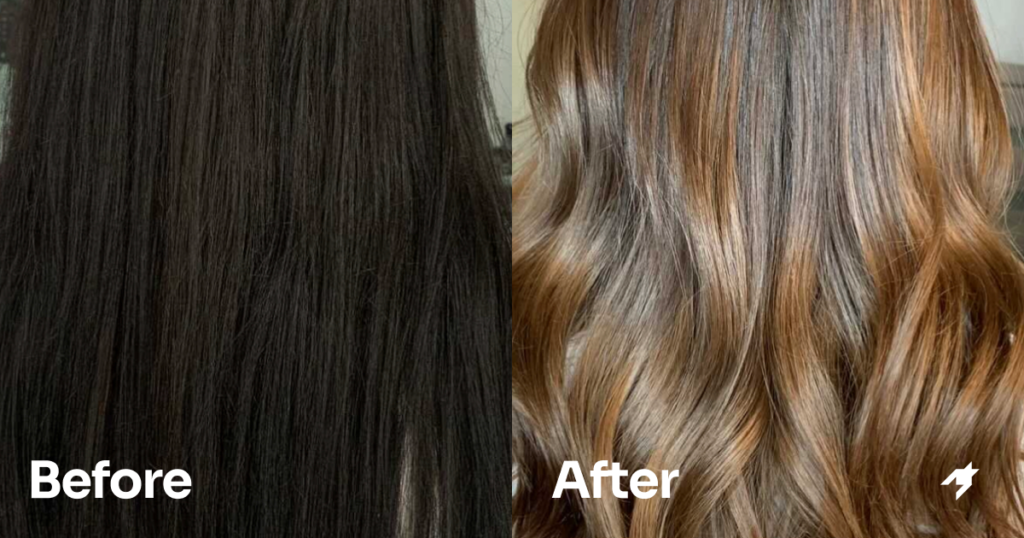
Where the estimate of 2–3 visits comes from
Taking dark hair all the way light in one sitting without real damage is not realistic, and a colorist will say so at the consultation. Spacing the sessions matters too: roughly a month between them lets the hair recover from oxidizers, powders and pigments.
Preparing hair for lightening after black
Groundwork decides how well the hair holds up and how little damage it takes. Two to three weeks ahead of the appointment, bring repairing masks and hydrating serums into your home routine.
In the same window, put away the flat iron, curling wand and other heat tools, and hold off on any coloring for at least a month beforehand.
Worth noting: talk the desired result through with your colorist in detail. Come prepared to:
- bring reference images of the shade you want;
- describe your coloring history honestly;
- hear a professional read on what is actually reachable.
Caring for hair after lightening
Once the procedure is done, the hair runs on maintenance, and it needs to be regular:
Protecting colour and rebuilding strength
Reach for shampoos formulated for coloured hair, heat protectants and sulfate-free formulas. Panthenol on the label is a good sign, since it calms the scalp and reinforces each strand.
Why masks and in-salon treatments matter
In-salon work such as keratin straightening, bio-lamination or mesotherapy keeps shine, strength and elasticity in place after bleaching. These treatments rebuild worn areas of the cuticle, packing the gaps with nutrients, and feed the scalp vitamins and minerals that support growth.
Black hair lightening at PIED-DE-POULE: why clients come to us
Leaving black behind in our salon means more than a new shade; it means the hair is genuinely looked after throughout.
Skilled colorists and individual plans
We work with strong decolorizers and build the lightening plan around each client, with no detail left out.
Client transformations you can see
Hundreds of black-to-light transformations sit in our portfolio, and part of it lives on our Instagram account. We know where damage comes from and how to reach the result you are after without it.
Booking an appointment at PIED-DE-POULE
Booking runs through our hairdressing services page. Keep in mind that several procedures may be required, along with extra services, or a method that suits your hair better than the one you had in mind, so the listed prices serve only as a reference point.
Ahead of lightening we will walk you through preparation and give a rough sense of how long the process takes in your case. During the session we will work out the full cost and map the visits into a step-by-step plan.