Swollen ankles at the end of the day, sock marks, tight rings, or facial puffiness in the morning—many people simply attribute these symptoms to “water retention.” How can you get rid of excess water? For mild, temporary swelling, regular physical activity, limiting excessive salt intake, maintaining proper hydration, and resting with your legs elevated usually help. However, if the swelling appears suddenly, affects only one limb, is painful, or is accompanied by shortness of breath, you should consult a doctor first.
It is worth remembering that the body cannot simply be “drained” of excess water. The pacjent.gov.pl service, run by the Ministry of Health and the NFZ, emphasises that water is essential for, among other things, maintaining normal blood volume, transporting nutrients and supporting kidney function, and that the body does not store it in reserve.
Medically, we are talking about oedema (swelling), a condition in which fluid builds up in the tissues. Medycyna Praktyczna points out that swelling may result from, among other things, changes in pressure within the blood vessels, increased permeability of their walls, impaired lymphatic drainage, or conditions related to heart, kidney and liver disease.
That is why the answer to how to get rid of excess water in the body is not always to drink less or do a drainage treatment. Sometimes more movement and a change in daily habits are enough. Sometimes a well-performed massage can help. And sometimes swelling is a signal that a medical consultation should come first.
In the rest of this article, we look at when changing your daily habits is enough, when it is worth considering lymphatic drainage massage or a device-based treatment, and when it is better to see a doctor first.
Is There Really Too Much Water in the Body?
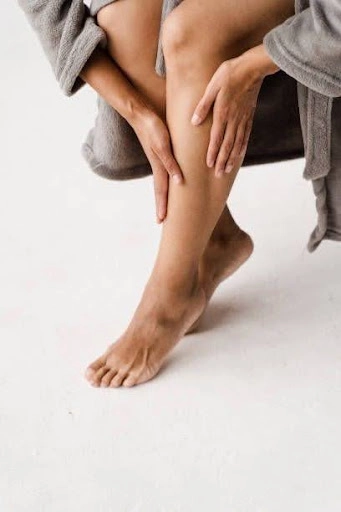
Water makes up roughly 50–60% of an adult’s body weight and is found both inside and outside the cells. Its movement is constantly regulated by the blood vessels, kidneys, plasma proteins and the lymphatic system.
Oedema develops when an excessive amount of fluid accumulates in the interstitial space. This is not quite the meaning that detox advertisements often suggest.
It can be:
- localised, e.g. only around the ankle,
- symmetrical, e.g. in both legs,
- one-sided,
- temporary,
- chronic,
- generalised.
That is why excess water in the body is not really a single diagnosis.
How to tell if there is too much water in your body — the most typical signs are:
- swollen ankles or calves,
- heavier legs at the end of the day,
- swelling of the hands and fingers,
- tighter-feeling skin,
- sock marks,
- shoes or jewellery feeling tight,
- fluctuations in body weight over a short period.
With so-called pitting oedema, a dent may remain for a few seconds after you press the skin with a finger.
However, this is not a home test that can identify the cause. Lymphoedema, venous swelling or swelling related to a systemic disease may look different.
Why Does the Body Retain Water?

There are several mechanisms. Swelling can occur when pressure inside the blood vessels rises, the concentration of proteins that keep fluid in the circulation drops, vessel permeability increases, or the lymphatic system does not drain fluid efficiently enough.
Medycyna Praktyczna notes that facial swelling can have mild, temporary causes but can also be a symptom of systemic disease.
A Lot of Salt in the Diet
Sodium is one of the most important regulators of fluid volume in the body. A very salty meal can lead to a temporary increase in fluid retention. However, the biggest source of sodium is not always the salt added from the shaker: large amounts are found in processed foods, ready-made sauces, snacks and cured meats.
Prolonged Sitting or Standing
Gravity encourages fluid to collect in the lower parts of the body. This is why the calves and ankles may look normal in the morning but swell after several hours of computer work or a long journey. In such cases, regular calf muscle activity helps support venous return.
Hormones
Hormonal fluctuations related to the menstrual cycle can cause periodic fluid retention. Swelling is also common during pregnancy. Not every such case is a cause for concern, but sudden or significant swelling during pregnancy should always be discussed in line with the advice of a doctor or midwife.
Swelling of the legs and feet is also common in pregnancy, especially in its later stages. The pacjent.gov.pl website lists, among other things, raising the legs while resting and appropriate compression as methods used for physiological limb swelling in pregnant women.
Medications
Swelling can be a side effect of certain medications, including some blood pressure drugs, hormones, steroids and non-steroidal anti-inflammatory drugs.
However, you should not stop a prescribed medication on your own. If swelling appeared after starting treatment, discuss it with your doctor.
Heart, Kidney or Liver Disease
This is where the most important distinction comes in. In heart failure, kidney disease or advanced liver disease, fluid retention is the result of more serious physiological changes. A home water detox will not solve the problem in these cases.
How to Get Rid of Excess Water in the Body?
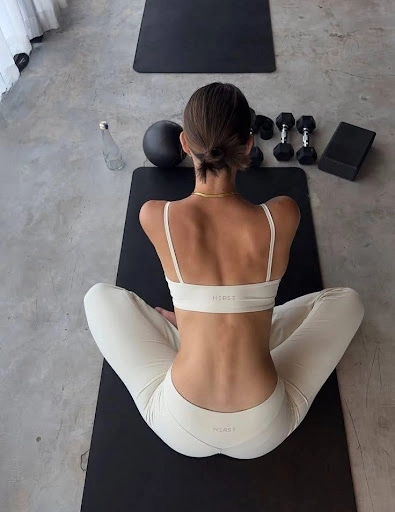
If you have a mild, temporary tendency to swelling, you can start with a few simple steps.
Drink Enough Water
It sounds paradoxical, but the answer to swelling should not be deliberate dehydration.
Fluid intake should be adjusted to the temperature, activity level, diet and state of health. There is no single magic number of litres that suits everyone.
The exception is people who have been advised to limit their fluid intake for medical reasons, e.g. with certain heart or kidney conditions.
Cut Down on Excess Salt
If you have swelling, it is worth checking for a few days not only the salt you add to your meals, but also the ingredients of ready-made products.
Items that are particularly easy to overlook include:
- ready meals,
- sauces,
- crisps,
- salty cheeses,
- cured meats,
- bread and snacks.
Eat Potassium-Rich Foods
Potassium is involved in regulating fluid balance, but more is not always better. Sources of potassium in an ordinary diet include vegetables, potatoes, beans, fruit and dairy products.
However, potassium supplements should not be taken on your own initiative as a remedy for water retention, especially if you have kidney disease or take medications that affect potassium levels.
More Movement
For swelling linked to long hours of sitting, this is one of the most practical steps.
It does not have to be an hour-long workout. The following can also help:
- a short walk,
- a dozen or so calf raises,
- moving your feet while at your desk,
- getting up regularly,
- breaks from a single position during a long journey.
The NHS also recommends gentle movement and avoiding staying in one position for long periods in cases of mild limb swelling.
Sleep
Lack of sleep is not the only cause of water retention, but it can affect your overall well-being, activity levels and how your face looks in the morning.
However, if facial swelling is persistent, significant or accompanied by other symptoms, it should not be put down to sleep alone.
Lymphatic Drainage Massage
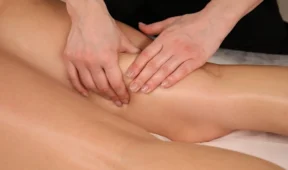
Lymphatic drainage massage is performed with calm, rhythmic movements whose direction follows the pathways of lymphatic flow. It is not a vigorous massage that “breaks down” water. The correct technique is much gentler.
For heavy legs or a mild tendency to fluid stagnation, it can be a good part of a care routine. In the treatment of true lymphoedema, however, manual lymphatic drainage is one element of a broader approach, alongside compression therapy, movement and skin care, among others.
What About Relaxation Massage?
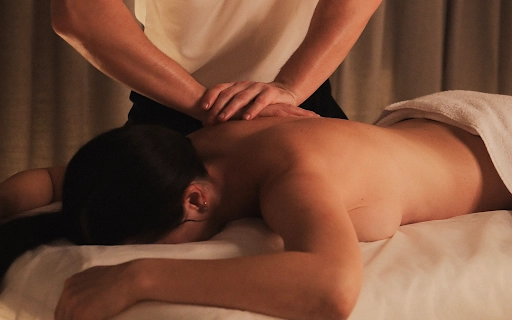
Relaxation massage can be a good choice if the goal is to release tense muscles, rest and recover after an intense week. If swelling is the main concern, however, it is better to consider a technique chosen specifically for that purpose, such as lymphatic drainage massage, or to find out the cause first.
You will find more available methods in the PIED-DE-POULE massages section.
Endospheres and Device-Based Treatments
Endospheres Therapy uses mechanical microvibrations and compression. In practice, the treatment is used for tissue work, for a feeling of heaviness and as part of body care, among other things.
It is worth keeping things in proportion: the device can support mechanical action on the tissues, but it does not remove water from the whole body and does not replace medical diagnosis.
If the swelling is caused by, for example, heart failure, thrombosis or kidney disease, the question of a device-based treatment becomes secondary.
What Removes Water from the Body Best?
It depends on the cause.
| Situation | What usually makes sense |
| Swelling after prolonged sitting | movement, changing position, raising the legs |
| Swelling after a very salty meal | returning to a normal diet and fluid intake |
| Mild tendency to fluid stagnation | movement, massage, selected treatments |
| Chronic venous insufficiency | medical consultation, often compression |
| Lymphoedema | specialist decongestive therapy |
| Swelling related to heart/kidney/liver disease | treatment of the cause by a doctor |
| Sudden swelling of one limb | urgent diagnosis |
As you can see, sometimes the answer is a walk, sometimes a massage and sometimes a doctor. That is exactly why it is worth identifying the pattern of the swelling first.
A gentle facial massage can temporarily reduce the appearance of puffiness, mainly by working on the superficial tissues and fluid drainage.
However, you should not expect it to resolve chronic swelling caused by disease.
For ordinary morning puffiness, time, getting upright and normal activity are often enough.
Movement is most helpful when the problem is linked to stagnation caused by sitting and low activity.
The work of the lower limb muscles supports venous drainage. For this reason, a sports massage can also be a pleasant addition after training, but it should not be presented as a treatment for swelling of unknown cause.
What to Avoid?
The least safe option is trying methods on your own that are meant to rapidly “dry out” the body.
You should not:
- take diuretics without medical indication,
- deliberately limit your fluid intake,
- use random “water retention” supplements,
- try to sweat out the swelling at all costs,
- perform an intense massage on a suddenly swollen and painful leg,
- assume that every swelling is a cosmetic problem.
Diuretics have specific medical indications. Using them incorrectly can disturb circulating blood volume and electrolyte balance.
When Does Swelling Require a Doctor’s Consultation?
This is one of the most important parts of the entire article.
Swelling that needs urgent assessment is especially swelling that:
- appeared suddenly,
- affects only one leg or arm,
- is painful,
- is accompanied by redness or noticeable warmth,
- occurs together with shortness of breath,
- comes with chest pain or pressure,
- is very severe,
- appears for no obvious reason.
The NHS advises seeking urgent medical help, particularly for sudden, painful swelling, redness or breathing symptoms.
Summary
Water retention in the body does not always mean the same problem. Sometimes swelling appears after prolonged sitting, hot weather or a salty meal, or in connection with hormonal changes, and goes away quickly. In such situations, simple steps make the most sense: regular movement, normal hydration, cutting down on excess salt and rest.
For those prone to fluid stagnation, lymphatic drainage massages and well-chosen device-based treatments that support tissue work and fluid drainage may also help. However, they should not replace diagnosis if the swelling is severe, one-sided, painful or keeps coming back.
At PIED-DE-POULE, a specialist can help assess whether lymphatic drainage massage, a device-based treatment or a combination of several methods will work best in your case. In line with the brand’s approach, needs and expected results are established first, and only then is a care plan selected, with no random treatments and no promises that any swelling will disappear after a single visit.