The same line on the face can have a completely different cause. One appears only when you smile, while another remains visible even when the muscles are relaxed. Sometimes the problem is not the wrinkle itself but darker, less elastic skin that makes the line look more pronounced.
This is why choosing the best treatment for wrinkles based only on their location — on the forehead, under the eyes or elsewhere — is not enough. The key is to determine what has changed in that area: muscle activity, hydration levels, collagen structure, elasticity or the effects of long-term UV exposure.
This determines whether a gentle treatment aimed at improving the skin surface, such as HydraFacial, may be suitable, or whether a method that promotes deeper remodelling, such as RF microneedling or a fractional laser, makes more sense.
What Are Wrinkles and Why Do They Form?
Skin ageing occurs simultaneously at many levels. Over time, changes take place in:
- collagen production and organisation,
- elastin levels,
- the thickness and structure of the epidermis,
- the skin’s ability to retain water,
- the distribution of fatty tissue,
- the supporting structures of the face.
Natural ageing is accompanied by photoageing, primarily associated with chronic UV exposure. Dermatological research shows that UV radiation accelerates the degradation of components of the skin matrix and contributes to wrinkles, pigmentation and loss of elasticity.
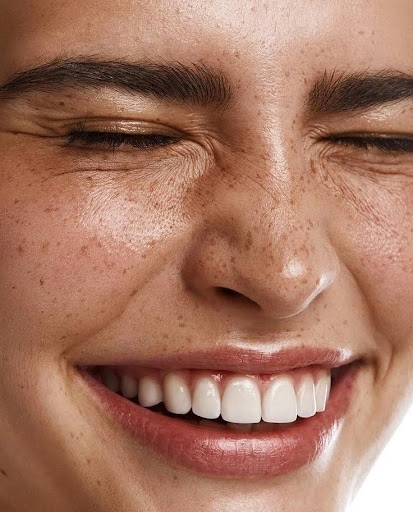
Another factor is facial expression. Every time you smile, frown or squint, the skin folds in the same places. Over time, lines that are initially visible only during movement may remain visible even at rest.
What Types of Wrinkles Are There?
The most practical classification is as follows:
| Type | What it looks like | Example |
| Dynamic | appear mainly during muscle movement | crow’s feet, frown lines |
| Static | remain visible when the face is relaxed | established forehead lines |
| Superficial | a fine network on the surface of the skin | eye area, cheeks |
| Associated with loss of firmness | occur together with skin laxity | neck, lower face |
| Photoageing-related | occur together with uneven texture and pigmentation | face, neck, décolletage |
This distinction explains why there is no single “best treatment for wrinkles”.
How Can You Reduce Wrinkles at Home?
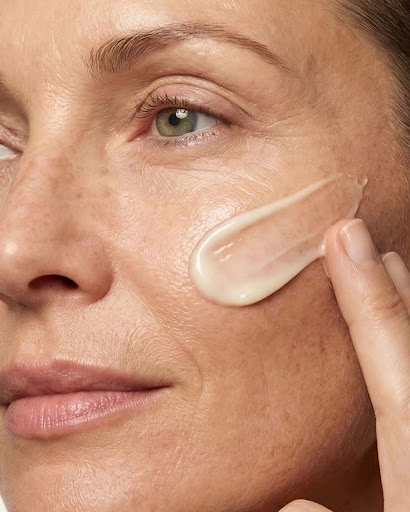
Deep, established wrinkles cannot be completely removed with home skincare. However, it is possible to make a meaningful difference to photoageing and overall skin quality.
Daily Sun Protection
If the aim is to prevent new wrinkles, sun protection is one of the fundamentals.
This is not only about going to the beach. The face, neck and décolletage are exposed to UV radiation during ordinary everyday life.
Retinoids
Among cosmetic and dermatological anti-ageing ingredients, vitamin A derivatives are some of the most extensively studied.
The strongest evidence concerns tretinoin, a prescription medicine in many countries. Systematic reviews have shown improvements in both fine and deeper wrinkles associated with photodamage.
Milder retinoids such as retinol and retinal are used in cosmetics. They work more slowly but are also supported by evidence showing an effect on features of photoageing.
Hydration
Well-hydrated skin can look smoother almost immediately because the stratum corneum retains more water.
This answers a common question: what smooths wrinkles immediately?
In most cases, the wrinkle itself has not been “removed”. Fine dehydration lines simply become less visible.
Lifestyle
There is no diet that can reverse wrinkles, but several factors matter when it comes to skin ageing:
- not smoking,
- protecting the skin from UV radiation,
- maintaining a normal, balanced diet,
- getting enough sleep,
- avoiding chronic skin irritation.
How to Get Rid of Forehead Wrinkles
Forehead wrinkles are often strongly linked to facial movement.
If a line mainly appears when you raise your eyebrows, its mechanism is different from an established wrinkle that remains visible all the time. When a persistent line is accompanied by a decline in skin quality, skin-remodelling procedures such as RF microneedling, fractional laser treatments, microneedling or selected peels may play a greater role.
The same applies to questions such as how to get rid of frown lines or wrinkles between the eyebrows. When there is a strong muscular component, a treatment that improves only the surface of the skin does not address the main reason the wrinkle forms.
How to Get Rid of Under-Eye Wrinkles
The under-eye area requires a much more cautious approach.
The skin here is thin, and the appearance of the area is influenced by several factors at the same time:
- fine wrinkles,
- facial movement,
- skin quality,
- pigmentation,
- blood vessels,
- volume loss,
- puffiness.
This means that someone asking how to get rid of under-eye wrinkles may actually need a completely different solution from another person whose under-eye area looks similar.
Treatments used to improve the quality of thin skin include biorevitalisation, as well as selected stimulators and polynucleotides.
Which Treatments Are Best for Reducing Wrinkles?
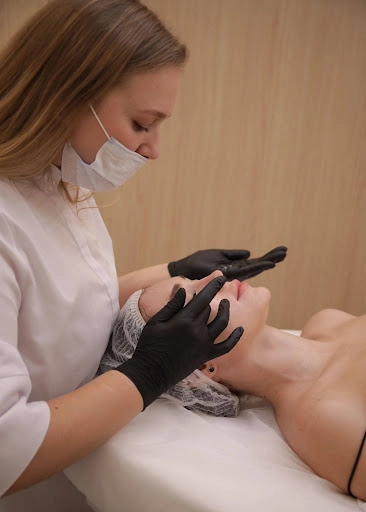
A good treatment plan is not about selecting the “strongest” device on the menu. The procedure should address a specific characteristic of the skin.
RF Microneedling
RF microneedling combines microneedling with the delivery of radiofrequency energy into the dermis.
The needles are inserted to a programmed depth and thermal energy is emitted within the tissue. This controlled injury triggers remodelling that gradually affects collagen structure and skin firmness.
A 2026 systematic review of studies on facial rejuvenation observed improvements in skin texture and firmness, while adverse effects were most commonly limited to temporary redness and swelling.
RF microneedling is particularly relevant when the main question is how to improve skin firmness rather than simply smooth an individual line.
HydraFacial
Fine lines caused by dehydration or uneven skin texture do not always require a treatment aimed at deep remodelling. One gentler option is HydraFacial, a procedure that combines cleansing, controlled exfoliation, vacuum-based treatment of the skin surface and the application of skincare products.
In a hydradermabrasion study involving a series of six treatments, researchers observed reductions in the appearance of fine lines, pigmentation and pores, as well as changes in epidermal structure. However, it is important to remember that this was a small study involving 20 women, so HydraFacial is better regarded as a method for improving hydration, smoothness and the overall appearance of the skin rather than a way of removing deep wrinkles.
More recent hydradermabrasion studies also indicate improvements in hydration, smoothness and fine lines, although some assess the treatment together with additional serums and home skincare, making it difficult to attribute the entire effect to the procedure alone.
LPG Facial Endermology
Facial endermology is a mechanical treatment. It does not act on the skin in the same way as laser treatment, radiofrequency or microneedling.
It may be used to work with the tissues, improve the appearance of the skin or form part of a regular skincare routine. However, for deep, established wrinkles, it should not be expected to produce effects comparable to procedures that trigger controlled remodelling of the dermis.
Microneedling Mesotherapy
During microneedling, numerous fine needles create controlled micro-injuries in the epidermis and dermis.
It is the body’s healing response — rather than simply “delivering a cosmetic product deeper into the skin” — that is one of the most important mechanisms behind the treatment.
A 2025 systematic review covering 21 studies and 723 patients reported the use of microneedling for concerns including wrinkles, texture changes, photoageing and skin laxity.
For this reason, a service page should distinguish conventional mesotherapy from microneedling — they are not identical procedures.
Tissue Stimulators
“Tissue stimulator” is the name of a large group of products rather than one specific substance.
Products differ in their composition, method of administration, injection depth and mechanism of action. Some are placed intradermally to improve skin quality, while others are injected more deeply to achieve a stronger structural response.
It therefore makes little sense to assess all tissue stimulators as if they were the same.
A particular group includes polynucleotides. Current reviews show promising findings relating to elasticity, hydration and fine wrinkles, but also highlight the small number of participants and the wide variation in treatment protocols.
This is a good example of a balanced approach to cosmetology: a method can be promising without pretending that science has already provided the final answer.
Medical Peels
Peels create controlled exfoliation at a specific depth, depending on the substance used and its concentration.
For superficial signs of photoageing, they may improve:
- texture,
- skin tone,
- fine lines,
- skin roughness.
However, they would not usually be the first choice for significant skin laxity.
Fractional Laser
A fractional laser creates microscopic columns of controlled damage in the skin while leaving unaffected areas of tissue between them. This triggers remodelling while allowing healing to proceed differently from older full-field resurfacing methods.
There are ablative and non-ablative systems. They differ in their parameters, results, downtime and risk of adverse effects.
Reviews of research confirm that fractional lasers can improve wrinkles and features of photoageing, although the result depends on the type of device and treatment parameters.
How to Choose a Treatment for Different Types of Wrinkles

| Problem | What is usually the main goal | Example methods |
| Fine lines and dry skin | improve hydration and the skin surface | skincare, biorevitalisation |
| Photoageing | remodelling + improving the surface | peel, laser, retinoids |
| Skin laxity | collagen remodelling | RF microneedling |
| Fine under-eye wrinkles | improving thin-skin quality | PN, biorevitalisation, selected technologies |
| Uneven texture | controlled regeneration | microneedling, laser |
| Pronounced dynamic wrinkles | muscle activity + skin condition | individual assessment, often combination therapy |
For superficial lines and dehydrated skin, treatments aimed at hydration and smoothing, such as HydraFacial or biorevitalisation, may be suitable. When firmness has been lost, procedures that stimulate skin remodelling, such as RF microneedling, may make more sense. Endospheres Therapy can complement a skincare plan as a method of mechanical tissue treatment, particularly when changes in skin quality are accompanied by mild puffiness or a feeling of tightness.
The most effective plan very often combines two levels: prevention at home and appropriately selected professional treatment.
How to Get Rid of Wrinkles Around the Mouth
The mouth area is highly mobile, so characteristic vertical lines may have several causes at the same time.
They are influenced by:
- facial movement,
- gradual collagen loss,
- photoageing,
- changes in tissue volume,
- smoking.
When asking how to get rid of wrinkles above the upper lip, it is therefore particularly important to assess their depth and how much they change with movement.
Superficial changes may be improved with resurfacing, microneedling or skin-quality treatments. Deeper lines sometimes require an entirely different strategy.
How to Get Rid of Wrinkles on the Neck and Décolletage

The neck and décolletage often receive far less skincare than the face, even though they are also exposed to considerable UV radiation every day.
When asking how to get rid of décolletage wrinkles, the main factors to consider are:
- photodamage,
- skin quality and thickness,
- skin laxity,
- the nature of the lines themselves.
Treatments used in these areas include biorevitalisation, peels, laser treatments and stimulating therapies, but the parameters must be adapted to the specific area.
What Smooths Wrinkles Immediately?
An immediate effect usually means a change in appearance rather than biological remodelling of the skin.
Hydration may reduce the visibility of fine lines within a few hours. Some procedures produce an early effect associated with swelling or tissue tightening.
However, new collagen does not appear within an hour.
If a treatment genuinely stimulates skin remodelling, a fuller result takes time to develop.
What Is the Fastest Way to Get Rid of Wrinkles?
The speed of improvement depends primarily on what is creating the line. Not every wrinkle responds to the same type of treatment.
- with dynamic wrinkles, facial muscle activity matters,
- with established lines, the structure of the skin also needs to be addressed,
- with a fine “network” of lines, hydration and the condition of the epidermis often play a major role,
- with loss of firmness, gradual remodelling of the deeper layers of the skin is needed,
- with photoageing, it is also important to reduce further UV exposure.
The fastest route to improvement is therefore not to choose the strongest treatment, but to match the method to the specific mechanism behind the wrinkle. This makes it easier to achieve a result that is not only visible but also more predictable.
This fits well with the PIED-DE-POULE Method: first, diagnosis and understanding of the condition of the tissues; then agreement on the expected result, treatment and follow-up recommendations. In the brand’s materials, this sequence is what creates a predictable and repeatable result.
What Really Helps Slow Down the Appearance of New Wrinkles?

The answer is not an increasingly crowded shelf of skincare products. What matters most is doing a few important things consistently. According to a study published on PubMed, protection from UV radiation is fundamental because chronic sun exposure accelerates the degradation of the skin’s supporting structures.
It is also worth:
- using well-tolerated skincare rather than changing it constantly,
- maintaining adequate hydration,
- considering a retinoid suited to your skin,
- not smoking,
- avoiding repeated severe irritation,
- assessing the condition of your skin regularly instead of trying to “catch up on everything” every few years with one intensive treatment.
Consistency also matters in professional skincare. A course of appropriately selected procedures usually makes more sense than undergoing completely different treatments at random.
Summary
It is impossible to answer the question of how to get rid of wrinkles properly without first determining what is causing the particular wrinkle. RF microneedling makes sense for loss of firmness and the need for skin remodelling, laser treatment is suitable for different indications from gentle biorevitalisation, while microneedling and peels work at yet another level of the problem. For very thin under-eye skin, polynucleotides may also be considered.
At PIED-DE-POULE, the starting point is an assessment of the condition of the skin and agreement on the expected outcome before treatments begin. Based on this, the specialist can recommend a single procedure or an entire treatment plan combining several methods in the appropriate order. This means a treatment is selected not because it is popular, but because it addresses a specific need of the skin.
In practice, the best results therefore come not from the strongest wrinkle treatment, but from appropriately selected and consistently maintained skincare.